
Beyond WSET: Forget everything you knew about Albariño!
For many the "Prima Donna" of Galician viticulture, this variety is destined to shape some of the greatest classical cuvées of the future.

To understand what Albariño is, we need to look toward the westernmost corner of the Iberian Peninsula: Galicia. A green, rain-soaked land shaped by the Atlantic — and Albariño’s true homeland.
With the rise of the St. James’ Trail, the idea that Albariño was a distant relative—or even a direct descendant—of Riesling gained traction. To make that story fit, some even claimed that the name itself hinted at its supposed German origin: Albariño supposedly meant “the white” (alba-) “from the Rhine” (-riño). Linguistically, the explanation is far less convincing, since the suffix -iño is simply the quintessential Galician diminutive. Still, for years it was widely believed that the variety had been brought here by Cistercian or Cluniacese monks, whether from France or Germany.
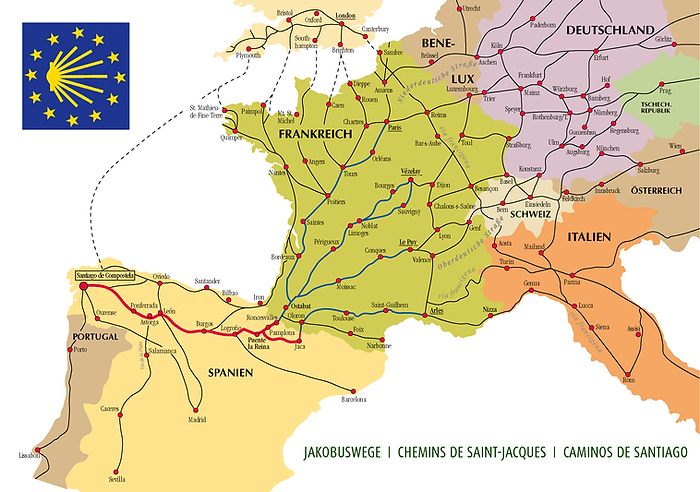
Today, we know that isn’t the case. Not long ago, carbon-14 analysis revealed that the earliest Albariño seeds date somewhere between the 2nd and 4th centuries AD, meaning its ancestor was already present in Roman Galicia — with Albariño likely emerging through hybridisation with local wild varieties.
The Salnés Valley (one of the sub-regions of Rías Baixas) has historically been the most important area for Albariño cultivation. The name “Salnés” comes from the fact that, in Roman times, O Grove was an island where salt mines were exploited. When sea levels fell and O Grove became a peninsula, much of the land once underwater turned into vineyards rooted in granite soils brushed with marine salt.
The Armenteira Monastery sits precisely in this region — a site of great importance for Albariño, as its monks are believed to have helped expand its cultivation. Albariño was grown exclusively in monasteries until the 19th century, when, after the Mendizábal confiscation, religious orders lost power and the landowners behind the local pazos (the Galician equivalent of a French château) began planting it as well, since it was regarded as a grape of “status and distinction” reserved for special occasions.
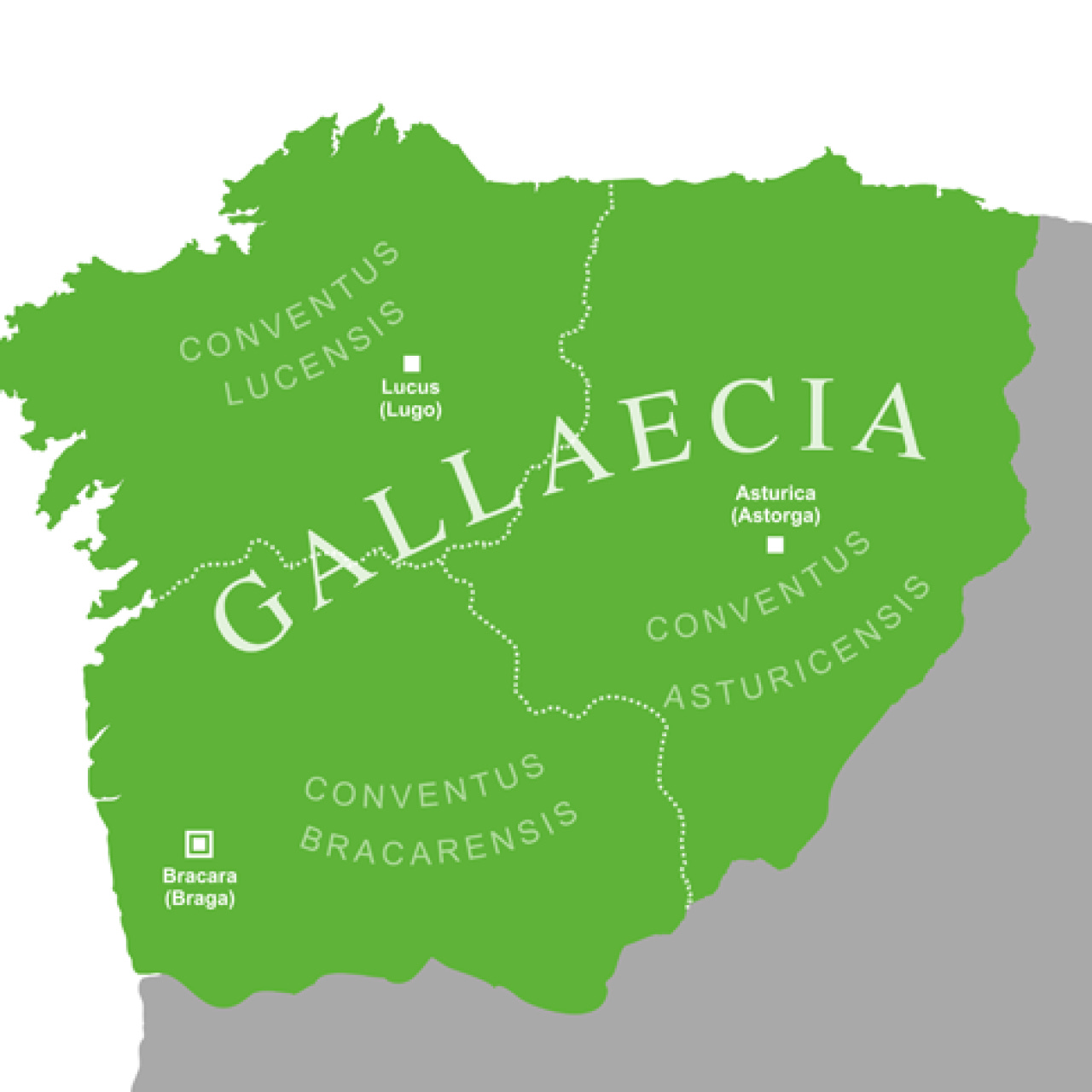
Thus, Albariño is native to the region and has been grown here since ancient times. Yet we still can’t definitively confirm whether Salnés is its birthplace, or whether it originated somewhere nearby — as Albariño grows not only in Rías Baixas but also in Ribeiro, Ribeira Sacra, Barbanza, Asturias, Vinho Verde… The map below shows the old Kingdom of Galicia — The first medieval kingdom in Western Europe —, and you’ll notice that all these regions fall within the same historical boundaries. It stands to reason that they shared not only political heritage but viticultural heritage as well.
Before the 1980s
Given Albariño’s current fame, it may come as a surprise that it was traditionally not the dominant grape in the Salnés, where it accounted for only around 20% of plantings. Vineyards were mostly red varieties such as Espadeiro, Loureiro, or Caíño Tinto. Albariño was consumed locally and barely exported. It was produced in limited quantities by landowners, priests, and better-off peasants and farmers with more varied diets. It was the high esteem for this white wine that sparked a series of shifts in the Salnés Valley, ultimately leading to increased production.
Albariño was scarce and expensive, which is why it became a form of exchange between Spain’s upper classes and Galician growers — costing two or three times more than the local light, acidic reds. After the Spanish Civil War, society was far from prosperous. People were getting by however they could. Everyone in the region wanted to enter the business by replanting their vineyards with Albariño at the expense of local reds. The rest is history: today this variety represents 96% (according to the D.O.) of total vineyard plantings in Rías Baixas.
The 1980s
Galicia was an agricultural and livestock-based society, and wine was produced mainly for personal consumption, as it formed an important part of the diet. Albariño was therefore cultivated as sustenance on very small plots (smallholding, or minifundio as the local call it, was — and still is — the rule). Surplus wine was sold in barrels to local merchants and restaurants, then served straight from ceramic jars into the traditional cuncas (ceramic cups). Bottled commerce was practically non-existent.
The 1980s brought an entrepreneurial mindset. Local growers realised that to make Albariño commercially viable, what they needed wasn’t equipment but knowledge — technical expertise that would allow them to produce quality wine. The only issue was that the generation behind those first wines didn’t travel, and instead of visiting the great classical regions, neighbouring wineries copied one another — even sharing the same winemakers — which inevitably standardised the industry.
During the first vintage of D.O. Rías Baixas (1988), total production was roughly 500,000 bottles — tiny compared to today’s 37,319,804 (2022). This commercial boom was fuelled by the mass planting of Albariño across the region, even in soils that had never held vines before. Soils more suited to corn, potatoes, or cereals. As a direct consequence, very few old Albariño vineyards remain.
This small-scale industrialisation of the minifundio landscape triggered high production, and oenological and biotechnological processes began to overshadow terroir. Winemakers were focused on crafting a commercial wine so that the world could become familiar with Albariño and understand the variety.
The 2010s
This decade marked the first significant generational shift. A younger group of winemakers emerged, committed to studying and training both at home and abroad — travelling, tasting, and learning from great terroir-driven wines. When they returned to take over their family wineries, armed with technical mastery, they allowed themselves to be more intuitive in their pursuit of purity — not of the variety, but of the terroir.
Names such as Eulogio Pomares (Zárate), Rodri Méndez (Forjas del Salnés), Xurxo Alba (Albamar), Chicho Moldes (Fulcro), Pedro Méndez, Do Ferreiro, Nanclares y Prieto, Eladio Piñeiro, Eido da Salgosa, Vimbio, Tricó, Bodegas Carballal, Iria Otero, Lagar de Pintos, José Crusat (Adega Entre Ríos, Barbanza), Mixtura, Atrium Vitis (Ribeira Sacra), Anónimas Wines, Begoña Troncoso, Constantina Sotelo, Adega Sergio Álvarez, Cabana das Bolboretas, Acios da Xesteiriña, Torgo, Marcial Dorado (Destinos Cruzados), Cume do Avia, Márcio Lopes, Fernando Paiva (Quinta da Palmirinha), and Luís Seabra — among many others — represent this new wave of change, not only in Rías Baixas but also across other Galician regions and northern Portugal.
Albariño’s DNA
Talking about Albariño means talking about a grape with thick skins that generate abundant bloom — a white, powdery mantle that coats each berry. This translucent wax acts as a natural protector: it prevents insects from easily attacking the fruit, shields it from the sun, and in a region as humid and rainy as Galicia, works as a waterproof cloak.
Albariño shares many chromosomes with Caíño Tinto, giving it a markedly phenolic profile that translates into astringency and bitterness — a key part of its varietal identity. It is also rich in glycerol, lending smoothness, volume, a faint sweetness, and a silky texture.
It naturally has high acidity (between 7.2 g/L and 14.3 g/L), once considered a defect; today, we know this is precisely what gives Albariño its longevity. The hard granite where the vines grow also contributes to their ability to age — easily more than 15 / 20 years.
Its resistance to fungal diseases is not strong, which is why the traditional emparrado or pergola system remains ideal as it allows ocean breezes to pass through, reducing pressure from humidity-driven pathogens.


Highly vigorous and relatively productive, Albariño requires intensive vineyard work to achieve quality. The D.O. limits yields to 12,000 kg/ha, though true expressiveness emerges when yields are brought down below 8,000 kg/ha.
Its long vegetative cycle favours its terpenic nature, giving the variety significant aromatic expressiveness — though not exuberance. Expressiveness refers to complexity, not intensity. With this in mind, two winemaking philosophies exist for Albariño:
1) The path of aromatic exuberance
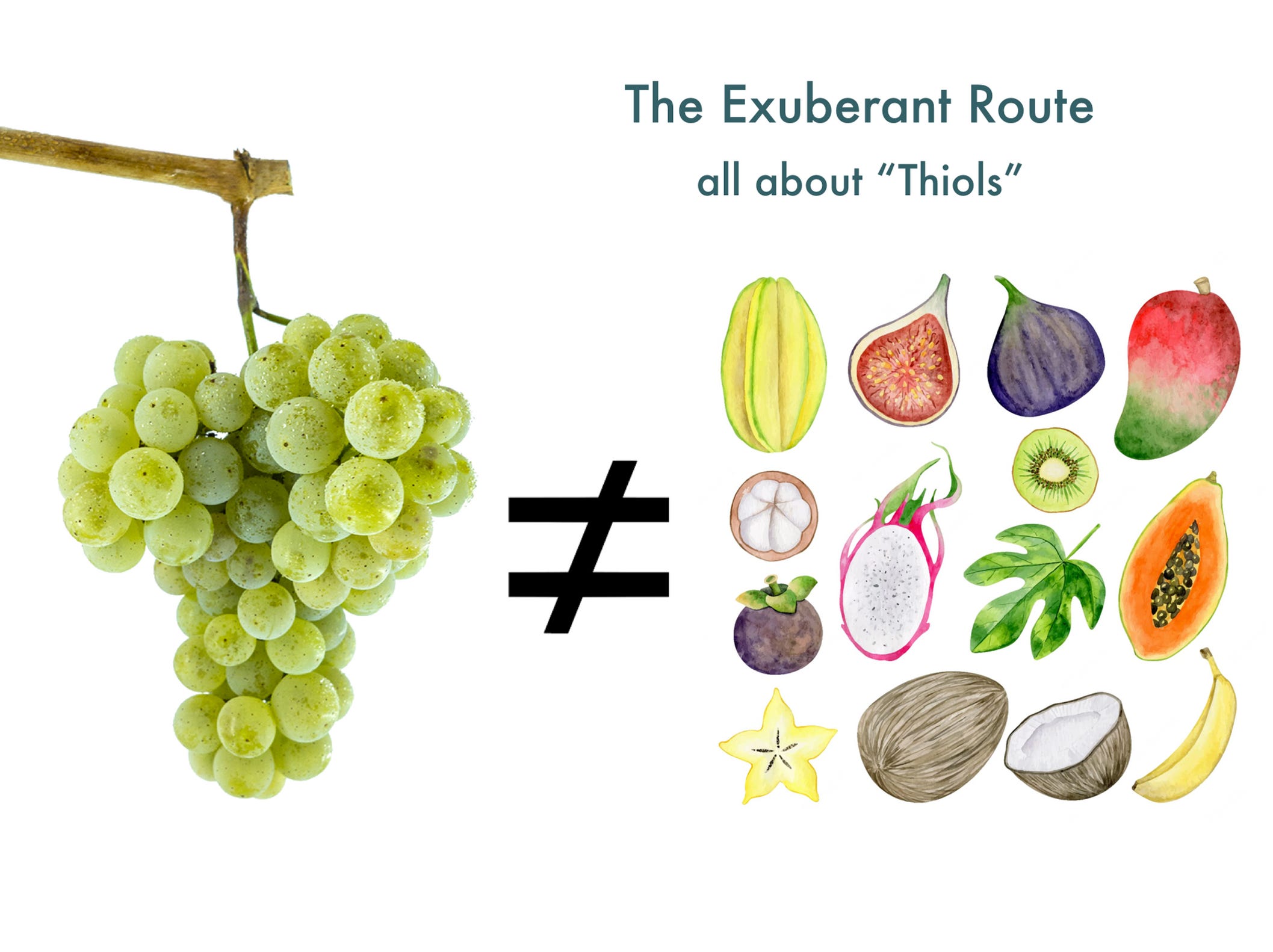
This approach seeks to amplify Albariño’s thiolic profile. The problem? Albariño is not a thiolic grape. Thiols — volatile sulphur compounds responsible for tropical aromas (papaya, passion fruit, pineapple, mango, banana skin, etc.) — are highly demanded by the Spanish market. As a result, these nuances became widespread in Albariños, stripping them of typicity and homogenising their character.
How do winemakers achieve this profile?
Quite simply: using selected yeasts that produce sulphur compounds during fermentation, especially at low temperatures. Albariño has never naturally smelled like a tropical fruit salad. If you find one that does, someone has interfered. Best to return it and order something else.
2) The path of austerity
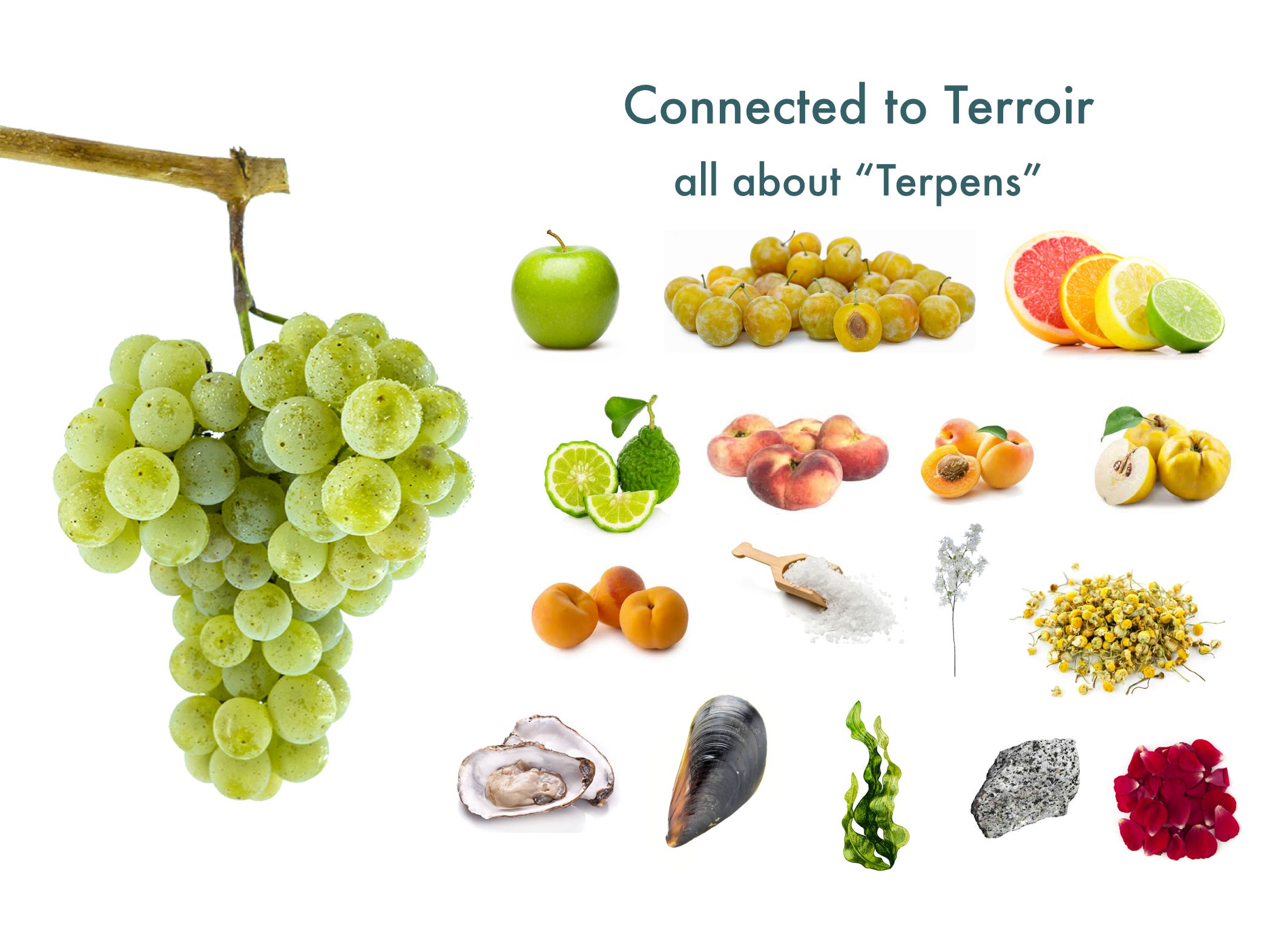
This approach respects the grape’s terpenic nature — the only way to produce terroir-driven wines. Terpenes are found in grape skins, so cold macerations matter. This wide aromatic palette includes apples, mirabelle plums, citrus peel, bergamot, fresh quince, apricot skin, peaches, white stone fruit, blossoming white flowers, chamomile, hay, honeysuckle, flint, salinity, seaweed, and oyster shell.
Crafting the great cuvées of tomorrow
Only recently have we realised that we’ve been drinking Albariño far too young. While young Albariños are superb, they hide nuances that only emerge with time. For nearly two decades, producers have been shifting toward crafting cuvées designed to age — a necessary step if Albariño is to stand among the world’s great white wines.
It’s ironic that the industrialisation of winemaking in Rías Baixas led to stainless steel. Traditionally, Albariño was pressed in granite presses and vinified in chestnut barrels. Today, some winemakers are revisiting chestnut and experimenting with concrete, granite, clay, demijohns, and large foudres.
Looking ahead, the trend is moving toward longer ageing on fine lees, producing ageworthy wines in both reductive (stainless steel) and oxidative (porous vessels) environments. This shift began when old bottles — never intended to age — were opened and found to have evolved beautifully. Mature Albariño develops notes of quince jelly, dried stone fruit, butterscotch, honeycomb, roasted nuts, and crème brûlée.
Historically, Albariño was drunk in July or August. As mentioned earlier, rural growers vinified Albariño in barrels with no temperature control. After fermentation, its high natural acidity was considered negative, so the wine was left to rest until summer when it became more drinkable. They trusted their palate because they lacked the technical knowledge to realise that malolactic fermentation occurred as temperatures rose.
Today’s big question: malolactic or not? A very Galician answer: It depends.
A winemaker’s own sensibility is part of terroir, so malolactic decisions depend largely on personal taste.
Generally speaking, malolactic fermentation is allowed in cuvées intended to age, since by the fourth or fifth year these wines offer immense complexity, with acidity fully integrated into a silky structure. Early-drinking wines normally skip malolactic because it leaves yogurty notes. Still, some producers choose to keep this tradition for wines meant for immediate consumption.
Where do we go next?
As you can see, Albariño is far more complex than what many wine books suggest. If we want this variety to play in the top league, local winemakers must begin channelling their efforts into promoting sub-regions, villages, and single vineyards. But that is a conversation for another day.
🍷
#7 Top 50 Sommeliers in the UK 2025
Miguel, I also saw this excellent post in the wsg wine chat. As I said, there, the hot dry, desert climate of eastern Washington State, according to the growers and winemakers there drive the wine naturally toward more tropical notes. Galicia's more moderate coastal climate lends the grapes to a different wine. Anyway I would also like to geek out about this more
One clarification: the word Albariño derives from the Galician word "albar" for "white" with the diminutive "-iño", not "white of the Rhine"