
Rías Baixas — a deeper structural issue beyond yields
The decline in grape prices highlights the shortcomings of the current model in Rías Baixas.

As is so often the case at this time of year, in Galicia — and particularly in Rías Baixas — we find ourselves reopening the same old debates: are we abusing phytosanitary products, should yields be curtailed… A kind of seasonal loop that, rather than helping us move forward, often highlights how little progress has been made in addressing the underlying issue.
A few months ago, a reality that can no longer be ignored was laid bare. The Albariño vineyards planted in recent years — both by large local wineries and by outside wine groups in Rías Baixas — have begun to come into production. This has not only increased the total vineyard area but also boosted wine stocks. By 2025, in just over a decade, vineyard surface has expanded from just under 4,000 hectares to almost 5,000.
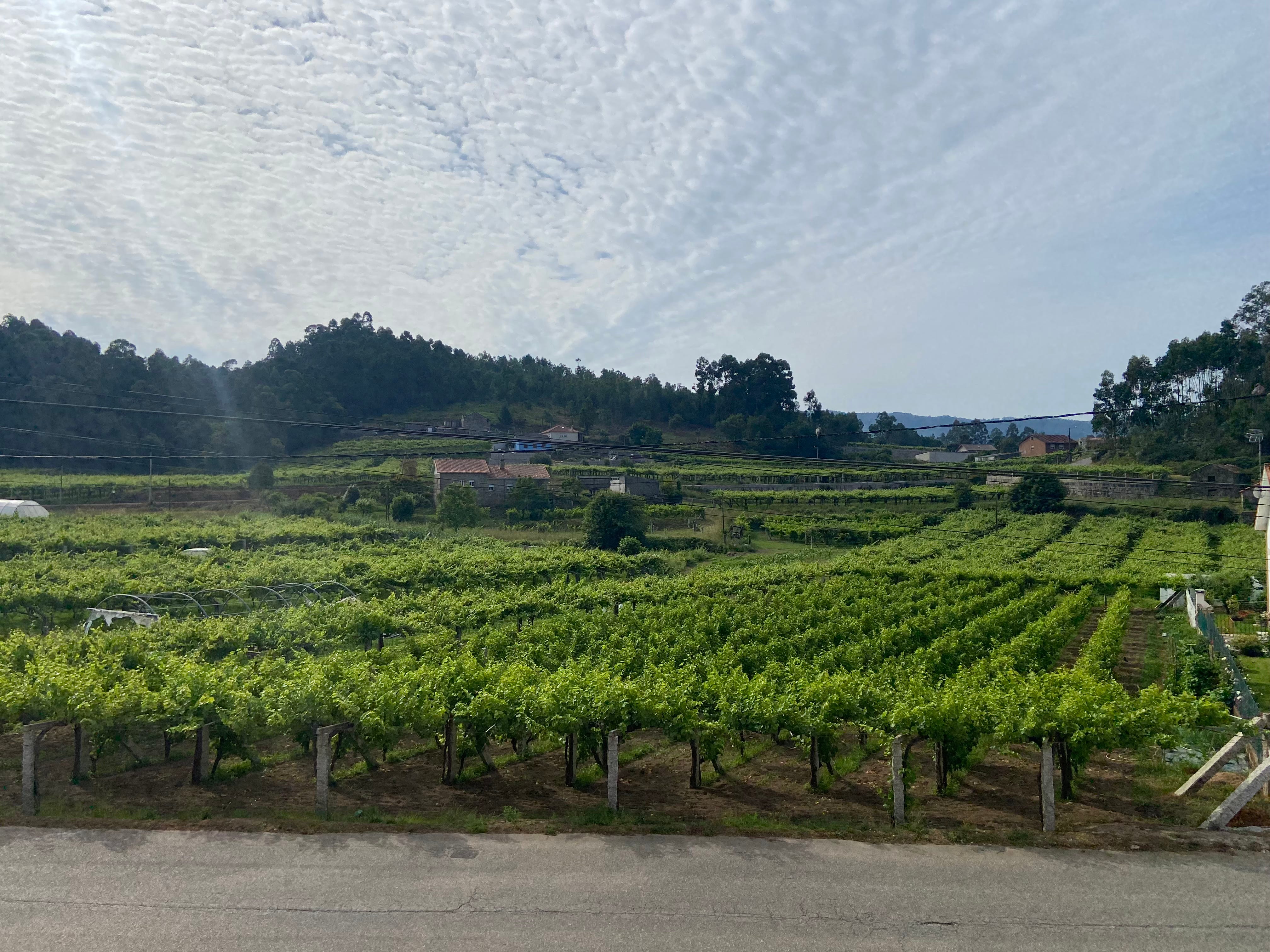
And when supply rises, the consequences are inevitable: downward pressure on grape prices. For context, in previous vintages grapes were fetching more than €2 per kilo, peaking in 2022 at around €3.50/€4. However, during the 2025 harvest, prices fell to levels not seen for some time — down to €1.50 per kilo, below production costs — simply because growers struggled to find buyers. This is hardly surprising: the large wineries that once drove prices up while their own vineyards were not yet productive no longer need to purchase fruit.
Indeed, many growers were unable to sell part of their crop, leaving grapes unharvested on the vines. At present, growers are permitted to harvest a maximum of 12,000 kg per hectare, with the possibility of increasing yields by 25% in exceptional circumstances. Large wineries, however, can balance yields internally, offsetting more productive plots with less productive ones. This is a flexibility that small growers — often working plots of less than a hectare — simply do not have.
Against this backdrop, many voices have called for a reduction in maximum yields in certain years — specifically when there is a surplus of wine. The idea is to rein in supply in order to support prices and provide growers with some degree of financial stability.
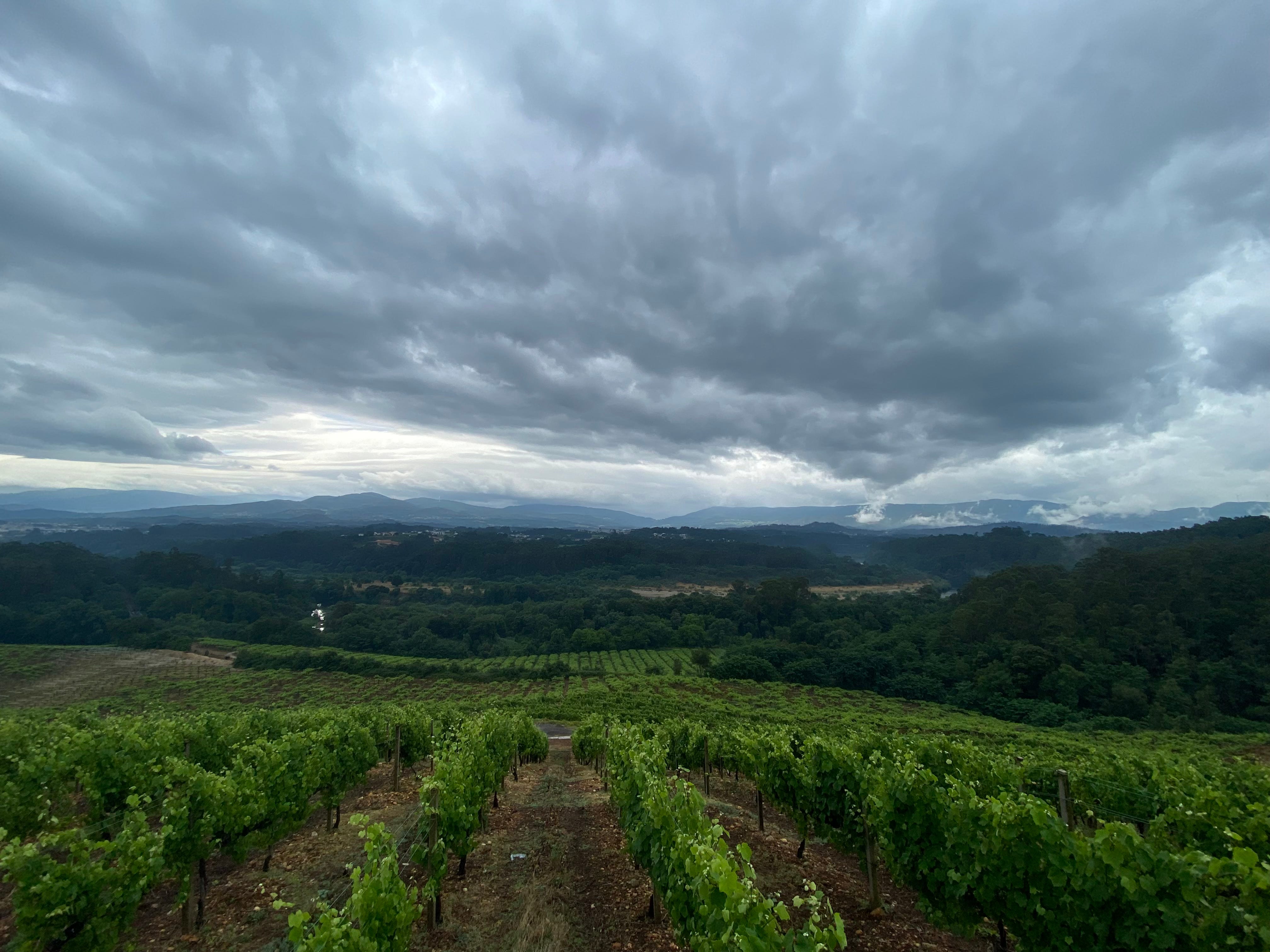
On paper, this should not create major tensions, as the average yield per hectare sits at around 9,000 kilos, largely due to the region’s fragmented land ownership (minifundio). But that average masks significant differences between subzones. In areas such as O Salnés, where productivity is higher, the impact would be both direct and considerable.
In fact, such a measure is estimated to affect more than three-quarters of local growers. Overall, it would remove several million kilos of grapes from the market and, in doing so, limit growers’ profitability — raising concerns that people may lose the incentive to remain in viticulture. It would also necessitate tighter controls to ensure that surplus fruit does not find its way into unregulated channels.
So, what should be done?
Reducing yields makes sense — but only if it is accompanied by a genuine hierarchy of vineyards.
Galicia urgently needs to organise its vineyard landscape. Subzones must be more clearly differentiated, introducing concepts that are deeply rooted here — such as village (concello) or parish (parroquia) wines, as provenance has always been discussed in these terms — and, crucially, vineyards must be classified. It is time to acknowledge that not all plots have the same potential, nor should their fruit command the same price as a neighbour’s if the latter is of lesser quality — however uncomfortable that may be for those who believe their land is worth its weight in gold, even when it is planted in sites ill-suited to viticulture.
Without such a hierarchy, cutting yields becomes a blanket measure — one-size-fits-all — and in a region as fragmented as this, that is deeply inefficient. What is lacking is not merely production control, but a qualitative vision of the vineyard.
There is, in my view, a second, deeper issue. Much of the current model in Rías Baixas is built around growers selling grapes to third parties. This leaves them highly exposed to market fluctuations.
Talking about guaranteed minimum prices or fair wages is necessary, but not sufficient. As long as growers remain mere suppliers of raw material, their decision-making power will remain limited.
The real shift, then, lies in moving towards a grower–producer model. It is worth asking whether the subsidies and support currently absorbed by large wine groups might be better directed towards growers willing to become small-scale producers, fostering a more expressive, quality-driven viticulture.
🍷
Galician Sommelier does not publish advertising or accept paid collaborations of any kind. If you like what I write, share it with anyone who enjoys discovering and experiencing new wines. And if you feel like supporting my work through crowdfunding, you can do so below. You’d be helping me bring to life the book on Galician wines that I’m currently working on 🍷